

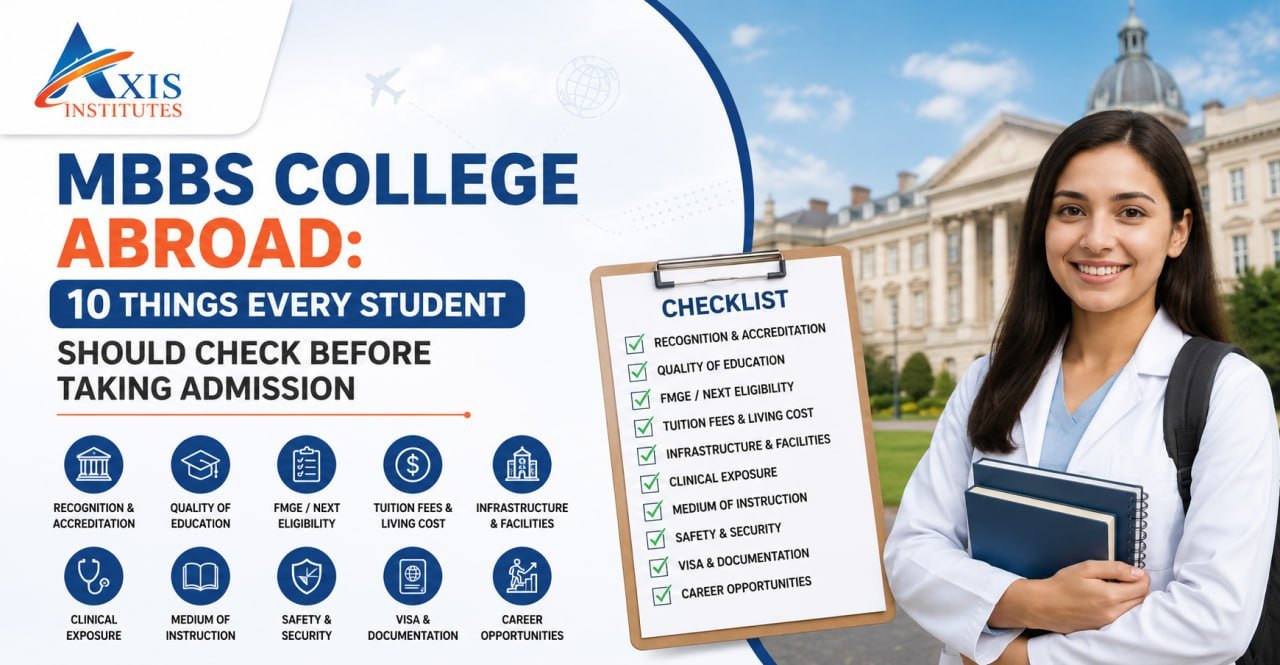
MBBS College Abroad: 10 Things Every Student Should Check Before Taking Admission
One of those decisions that students rarely get a second chance at is choosing where to study medicine. Once you’re enrolled and classes start, to withdraw is to waste time and money, and perhaps a whole year of school. So this is exactly what needs a proper look before signing up with any MBBS College Abroad.
- Recognition status by NMC
This is the first because if this is missing, then nothing else matters. Kindly verify if the university appears in the approved list of the National Medical Commission. Don’t bother with this step and a degree, however hard won, will just not count for practice in India later.
- Clinical Exposure & Hospital Tie-ups
Textbooks will only get a medical student so far. Ask about how many hospitals are affiliated with the university and how early students start working with real patients. A college that reserves clinical exposure for the final years of training produces graduates who feel unprepared when real practice begins.
- Faculty Experience
It matters who teaches the coursework, more than most prospectuses suggest. It also depends on the faculty – more experienced faculty with actual clinical experience tend to develop better and confident doctors than those institutions that depend on young and less experienced faculty.
- Language of Instruction
Some universities teach entirely in English, others shift to the local language once clinical years begin. Students who don’t confirm this early sometimes end up managing two learning curves at once, medicine and an unfamiliar language, which is a rough combination under academic pressure.
- Complete Fee Breakdown
Tuition numbers look attractive on paper, but hostel charges, mess fees, insurance, and visa costs add up fast. Getting a full breakdown before committing avoids nasty surprises once the family is already financially and emotionally invested.
- Hostel and Campus Infrastructure
Living away from home for five or six years means daily comfort genuinely matters. Check hostel conditions, food options, and how close accommodation is to hospitals and academic buildings. Small inconveniences become exhausting over years, not months.
- Safety and Student Support Systems
A university with an established Indian student community usually handles cultural transition far better than one where international students are a rarity. Ask about safety measures, emergency support, and whether the administration is responsive when students actually need help.
- FMGE and NExT Track Record
A degree only proves useful once it’s recognised back home. Ask the university for data on how many of its Indian graduates have cleared the Foreign Medical Graduate Examination or NExT in recent years. Strong numbers usually indicate solid academic structuring.
- Duration and Curriculum Structure
Course length and syllabus design vary across countries and universities. Confirm how the curriculum aligns with what’s expected for Indian licensing exams, since gaps here often mean extra self-study later just to catch up.
- Reviews From Actual Alumni
Marketing materials say what universities want you to hear. Alumni say what actually happened. Reach out to students who’ve completed the course or are currently enrolled, and ask direct questions about academics, faculty, and day-to-day campus life.
Why This Checklist Actually Matters
Every point above sounds obvious in isolation, yet students skip half of them regularly, usually because verifying this much information alone is genuinely difficult. This is where proper guidance changes the outcome entirely. Axis Institutes, based in Rohini, Delhi, has spent 13 years helping students evaluate exactly these factors before committing to a university abroad. Their partnerships with Tashkent State Medical University and Samarkand State Medical University in Uzbekistan give students verified access to institutions that check every box on this list: recognised status, strong clinical exposure, and a consistent track record with Indian graduates.
Before You Decide
Choosing to Study MBBS Abroad is a significant commitment, and doing the homework properly beforehand makes the difference between a smooth six years and a stressful one. Families who take this checklist seriously, rather than rushing based on a persuasive sales pitch, tend to make far more confident, informed decisions. If narrowing down the right college still feels overwhelming, a detailed conversation with someone who’s guided hundreds of students through this exact process is worth far more than another round of independent research.